
Cylindrical Roller Bearings
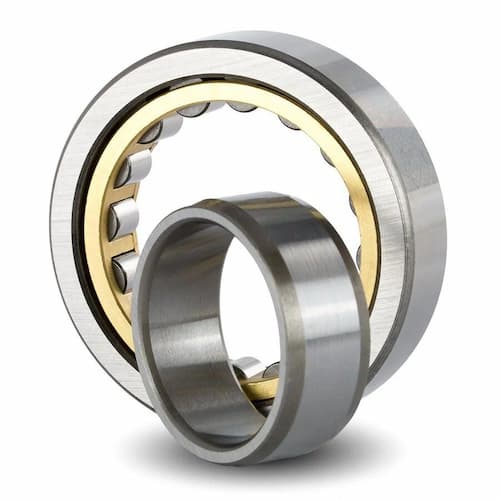
Cylindrical roller bearings are a go-to solution when machines need very high radial load capacity, high stiffness, and efficient rotation at speed. Compared with ball bearings, their rollers create a line contact with the raceway, enabling higher load carrying capacity and rigidity—ideal for demanding industrial duty. SKF notes that cylindrical roller bearings are well suited for applications facing heavy radial loads and high speeds, while offering high stiffness, low friction, and long service life.
If you’re evaluating DKFL cylindrical roller bearings, you’re typically aiming to reduce downtime in gear drives, production machinery, and rotating equipment by selecting the correct bearing type and arrangement from a wide catalog. DKFL lists a dedicated cylindrical roller bearing category with a broad lineup (shown as 80 results in the online range), including N-type, NJ-type, and NU-type variants.
What makes cylindrical roller bearings a smart choice?
Cylindrical roller bearings are especially valuable when your application needs:
-
High radial load capacity (e.g., heavy shafts, belt loads, gear mesh forces)
-
High stiffness (improves alignment, reduces vibration, supports accuracy)
-
Axial displacement capability in certain designs (useful for thermal expansion)
-
Service-friendly mounting because many designs are separable (easier assembly)
A key engineering advantage is axial displacement: SKF explains that cylindrical roller bearings can accommodate axial displacement except for configurations with flanges on both inner and outer rings. This matters in gearboxes and long shafts where thermal growth would otherwise overload bearings.
DKFL cylindrical roller bearing types: NU, NJ, NUP—and what they mean
Selecting the right rib/flange configuration is critical because it determines whether the bearing is “floating” (non-locating) or “locating” (fixed-end).
NSK’s type guide summarizes common configurations clearly:
-
NU, N, NNU, NN: typically suitable as free-end (non-locating) bearings (allow axial movement).
-
NJ, NF: can sustain limited axial load in one direction.
-
NUP, NH: typically suitable as fixed-end (locating) bearings.
DKFL’s product range reflects these common industrial types, with examples visible in its category listings such as N 315-EMC3, NJ 2322-EMC4, and NU2205-TVPC3.
Practical takeaway:
-
Use NU/N designs when you want one bearing position to “float” and absorb thermal expansion.
-
Use NUP/NH (or matched arrangements) when the shaft must be axially located.
-
Use NJ/NF when you need some thrust handling in one direction, but keep the design limits in mind.
Common applications for DKFL cylindrical roller bearings
Because they excel at radial load and stiffness, cylindrical roller bearings are frequently chosen for:
-
Gearboxes and industrial transmissions (stable gear mesh, stiffness under torque)
-
Industrial motors and generators (high speed, steady radial load)
-
Pumps & compressors (shaft stability and reliability)
-
Steel, paper, cement, and mining machinery (heavy loads + contamination risk)
-
Machine tools (especially where radial rigidity and accuracy are key)
SKF even highlights gearbox relevance directly in its cylindrical roller bearing catalog messaging—emphasizing capacity, speed range, and low friction as reasons gearbox manufacturers use them.
How to choose the right DKFL cylindrical roller bearing
To get the best performance and life, use this quick checklist:
-
Load direction & axial requirement
Decide whether your bearing position must locate the shaft axially (fixed end) or allow thermal movement (free end). Use NU/N for floating; NUP/NH for locating. -
Speed and heat
Cylindrical rollers can run fast, but speed creates heat. Confirm the bearing’s speed limits and ensure lubrication matches your operating temperature. -
Contamination and sealing strategy
If dust or water is present, consider sealed solutions or improved housing seals. SKF notes sealed cylindrical roller designs can improve contaminant exclusion and lubricant retention for longer life. -
Mounting and fits
Many cylindrical roller bearings are separable, which simplifies installation—if fits and alignment are controlled. Poor fits can cause creep, heat, and early failure.
Conclusion
DKFL cylindrical roller bearings are a strong option when you need heavy radial load capacity, high stiffness, and reliable performance at speed. With a broad lineup (including NU, NJ, and N-style variants), DKFL supports both floating and locating bearing arrangements for gearboxes, motors, pumps, and heavy-industry machinery.