
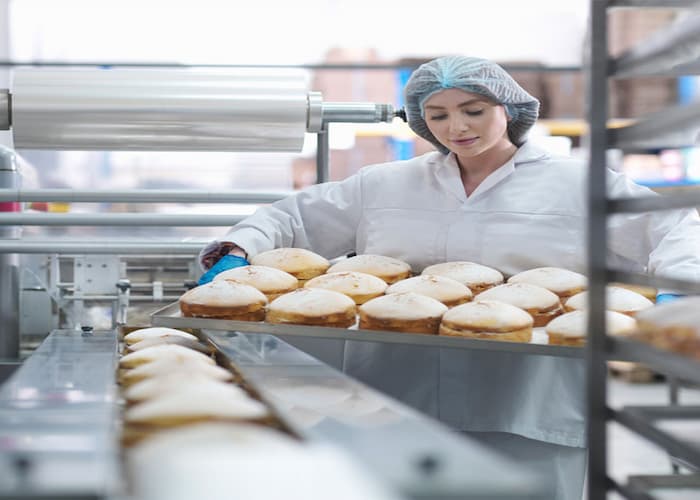
Food Processing Machinery
Food processing equipment is brutal on bearings: high duty cycles, vibration, and frequent washdowns. In conveyors, mixers, slicers, fillers, and packaging machines, bearings influence uptime, efficiency, and hygiene. A poor bearing choice can trigger corrosion, grease washout, contamination risk, and unplanned stoppages. A well-specified bearing helps lines run quietly and predictably—even under sanitation routines and hygiene audits.
DKFL supplies a broad portfolio of bearing solutions and emphasizes engineering and modern manufacturing for customers worldwide. That breadth matters in food plants because different modules impose very different loads and speeds—from slow, heavily loaded rollers to fast rotating stations.
What food plants demand from bearings
Food-zone bearings typically need:
-
Corrosion resistance against water, steam, and cleaning chemicals
-
Strong sealing to block product dust and washdown ingress
-
Food-safe lubrication where incidental contact is possible
-
Stable torque and low noise for consistent product handling
In practice, most failures come from liquid ingress, abrasive dust, or lubricant selection that doesn’t match temperature and washdown frequency.
DKFL bearing types commonly used in food machinery
Two DKFL families are common in rotating subsystems:
Deep groove ball bearings
Deep groove bearings are the general-purpose workhorse for radial loads plus moderate axial loads. DKFL’s deep groove range includes many sealed variants (e.g., “2RS/2RSC3” suffixes shown in product listings), which are typically chosen to retain grease and reduce contamination entry.
Angular contact ball bearings
Angular contact bearings are selected when shafts see meaningful axial thrust in addition to radial load—such as screw conveyors, gear-driven modules, and certain high-speed stations. They’re also used in paired arrangements when designers need higher stiffness and controlled axial positioning.
How to specify DKFL bearings for washdown and hygiene
In food processing, “bearing selection” is really “bearing + seals + lubricant + materials.” Use this checklist:
-
Match the bearing family to the load
-
Mostly radial loads → deep groove
-
Radial + sustained axial loads or higher stiffness → angular contact (often paired)
-
-
Choose a corrosion strategy for the zone
-
Dry, enclosed areas may tolerate standard steels
-
Wet or washdown zones often need corrosion-resistant materials and seal materials compatible with your chemicals and temperatures
-
-
Prefer sealed designs where ingress is likely
Sealed bearings can reduce grease loss and maintenance exposure. SKF notes that sealed bearing solutions can reduce (or eliminate) relubrication in suitable parts of a production chain, which also reduces grease consumption and related waste. -
Use NSF H1 lubricants when required
NSF explains that H1-registered lubricants are intended for incidental food contact and are formulated in line with U.S. FDA guidance (21 CFR 178.3570). Align grease choice and re-grease intervals with your HACCP risk assessment and cleaning procedure. -
Validate ratings with catalog data
DKFL catalogs publish calculation data such as basic dynamic/static load ratings and reference/limiting speeds—use these to verify life and speed margin before field trials.
Bottom line
Optimizing “DKFL bearings for food processing machinery” comes down to hygiene-first specification: select the correct DKFL bearing type, insist on robust sealing in dusty/wet zones, match corrosion resistance to washdown reality, and run an NSF H1 lubrication plan where incidental contact is possible. Done right, you reduce unplanned downtime and support safer, more reliable food production.