
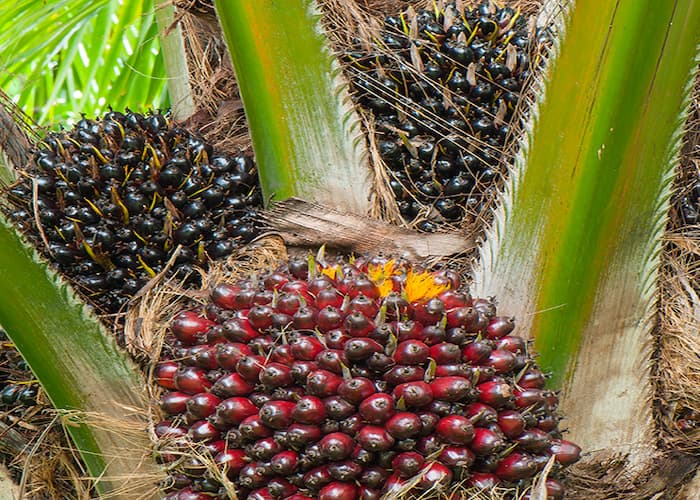
Palm Oil
Palm oil mills punish bearings with a rare combination of high shock loads, heavy contamination, heat/humidity, and washdown routines—exactly the conditions that trigger premature wear if sealing and lubrication are not engineered carefully. SKF’s palm-oil conveyor guidance summarizes the reality: product input can create shock loads, dust and dirt contamination is high, sterilization adds heat and humidity, and washdowns can strip lubrication.
If your goal is better uptime, “DKFL bearings for palm oil” selection should be approached as a system: bearing type + seals + lubricant + maintenance plan.
Where bearings work hardest in a palm oil mill
Palm oil production includes multiple mechanical stages that stress rotating equipment. Sterilization is typically the first major thermal step, preparing fresh fruit bunches for downstream threshing and pressing. In digestion and pressing, the process creates press liquor that is later separated and clarified, often using settling and centrifuges—adding continuous rotation demands and contamination risk.
A critical pain point is the screw press: studies of palm oil mills note recurring malfunction problems in screw press systems, highlighting why robust mechanical design (including bearings) matters.
DKFL bearing types that fit common palm oil applications
DKFL markets a wide product range across ball and roller bearing families (including deep groove, angular contact, cylindrical, tapered, spherical roller, and spherical roller thrust bearings). In palm oil mills, these families map well to typical load cases:
1) Spherical roller bearings for heavy loads and misalignment
Conveyors, crushers/shredders, and large rotating supports often suffer from shaft deflection and imperfect alignment. Spherical roller bearings are frequently chosen in such environments because they tolerate misalignment while carrying heavy loads. DKFL offers an extensive spherical roller lineup suitable for heavy-duty industrial use.
2) Tapered roller bearings for combined radial + axial loads
Gear-driven sections and certain press/drive arrangements can introduce notable axial loads. Tapered rollers are a common answer when you need stiffness under combined loading, especially in drivetrain and gearbox-style supports.
3) Deep groove ball bearings for motors, fans, pumps, and auxiliaries
Auxiliaries (motors, pumps, fans) often prioritize efficiency and speed capability. Deep groove ball bearings are a go-to option here—especially in sealed configurations to help retain grease and reduce ingress in dusty areas. DKFL’s ball bearing range includes deep groove families used widely in industrial equipment.
4) Thrust-capable solutions where axial load dominates
Some vertical shafts and press-related designs can generate significant axial loads. DKFL lists spherical roller thrust bearing families that are typically considered for high axial load scenarios.
The “big three” for longer bearing life in palm oil mills
1) Seal against water, steam, fiber, and dust
In palm oil mills, contamination isn’t optional—it’s constant. Seal design (labyrinths, contact seals, flingers, and protected housings) is often the difference between planned maintenance and surprise failure, especially on conveyors and near washdown zones.
2) Choose lubrication with food-safety in mind
Palm oil is a food product, so many plants specify NSF H1 lubricants for areas where incidental contact could occur. NSF explains that H1-registered lubricants are formulated for incidental contact and align with FDA guidance under 21 CFR 178.3570.
This doesn’t replace engineering—viscosity, temperature, and relube intervals still must match the application—but it helps align reliability with hygiene expectations.
3) Prevent water-driven failure modes
Water intrusion can do more than cause rust; it can disrupt lubricant films and accelerate damage mechanisms inside the bearing. Machinery Lubrication highlights how water can sharply disrupt oil films and contribute to failure processes.
In practical terms: improve sealing, use correct grease, keep relubrication clean, and avoid pressure-washing directly at bearing contact points.
Final takeaway
For DKFL bearings in palm oil, the best results come from matching the bearing family to the load (spherical roller for heavy/misaligned duty, tapered rollers for combined loads, deep groove bearings for auxiliaries, thrust solutions for axial loads) and then “hardening” the system with strong sealing and food-appropriate lubrication. DKFL’s broad catalog coverage supports this subsystem-by-subsystem approach.