

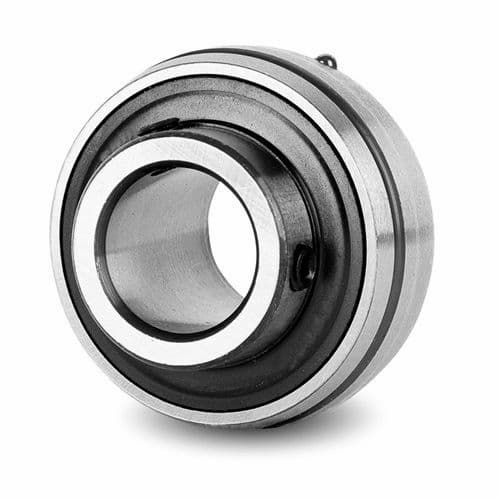
Radial Bearings
When most buyers search for “DKFL radial bearings,” they’re often looking for the insert-style bearings used inside pillow blocks and flanged housings—common on conveyors, agricultural equipment, processing lines, and general industrial machinery. DKFL groups these products under its Radial Bearings category and lists popular series like RAE, SA, SB, and UC.
What “radial bearings” usually means in DKFL’s catalog
In DKFL’s Radial Bearings category, the naming convention (UC, SA, SB, RAE) aligns with the broader market’s insert bearings concept—bearings designed to be pressed into a housing, with a spherical outer diameter to compensate for small misalignment. DKFL’s category page shows the lineup clearly (e.g., UC 204…UC 217, SA 205…SA 208, SB 206-2RS, RAE sizes, etc.).
These bearings are typically based on sealed deep groove ball bearing geometry, which is known for low friction and the ability to carry radial loads plus some axial loads.
DKFL radial bearing series and where they fit best
1) UC series: set-screw locking for straightforward installation
UC insert bearings lock onto the shaft using set screws on the extended inner ring. SKF describes UC insert bearings as being based on sealed deep groove ball bearings and highlights the set-screw locking/extended inner ring concept.
This makes UC bearings a strong choice for:
-
Conveyor rollers and belt-driven shafts
-
Fans, augers, and general-purpose rotating equipment
-
Applications with constant or alternating rotation (depending on variant)
A DKFL example is UC 205 DKFL (25 mm bore, 52 mm OD, 34.1 mm width), shown on DKFL’s product page—useful for matching housings and shafts during replacement.
2) RAE / SA series: eccentric collar locking for vibration-prone duty
In many industries, RAE and SA-style inserts use an eccentric locking collar and grub screws, which can be helpful when equipment sees vibration or frequent starts/stops. Industry descriptions of SA/RAE insert bearings explain the eccentric collar approach and note the spherical OD typical of housed inserts.
DKFL lists RAE bearings inside the Radial Bearings category, and the RAE 25 DKFL product page confirms its standard envelope size (25×52×15 mm).
This style is common in:
-
Agricultural machinery
-
Shakers, screens, and lightly misaligned mounts
-
Compact housings where quick locking is preferred
3) SB series: sealed inserts for dust and moisture exposure
DKFL also lists SB 206-2RS and SB 207-2RS in the radial bearings range, indicating sealed designs (“2RS” style) that help retain grease and reduce contamination ingress.
In practice, sealed inserts are often selected for:
-
Dusty conveyors and bulk handling lines
-
Washdown-adjacent equipment (when paired with suitable housings/seals)
-
Low-maintenance installations where relubrication access is limited
How to choose the right DKFL radial bearing
A fast, reliable selection process:
-
Confirm shaft diameter and housing series
Start with bore (d), outside diameter (D), and width (B). DKFL pages like UC 205 and RAE 25 provide these directly. -
Pick the locking method
-
Set-screw (UC): simple and common
-
Eccentric collar (RAE/SA): often favored under vibration and repeated cycling
-
-
Plan for misalignment and contamination
Insert bearings typically use a spherical outer ring so they can tolerate small static misalignment when mounted in an appropriate housing.
If the environment is dusty or wet, prioritize sealed variants and proper housing seals. -
Check speed and heat limits (when RPM is high)
If your application is fast-running, use bearing speed ratings carefully. SKF explains “reference speed” (thermal frame) and “limiting speed” (mechanical limit) as cautionary guideposts.
Conclusion
DKFL radial bearings are a practical solution when you need easy mounting, reliable shaft locking, and misalignment tolerance in housed units. Whether you select UC (set-screw), RAE/SA (eccentric collar), or sealed insert variants like SB, the best results come from matching the locking method and sealing to your real operating conditions—then confirming dimensions from DKFL’s product data.